
What Is Ureteroscopy (URS)
Procedure Overview
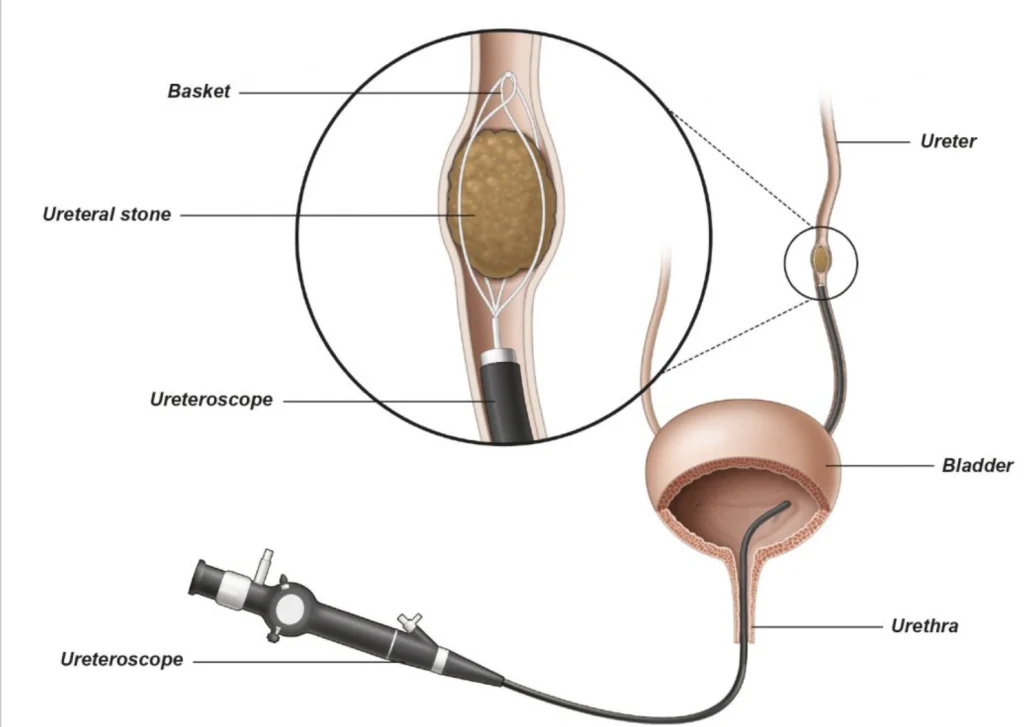
Ureteroscopy (URS) is a minimally invasive procedure used to remove stones from the ureter (the tube connecting the kidney to the bladder).
A thin flexible scope (ureteroscope) is passed through the urethra and bladder
The stone is located and either removed or broken using laser energy
No external cuts or stitches are required
When Is URS Recommended?
URS is commonly advised when:
Stones are lodged in the ureter
Stones cause blockage, infection, or severe pain
Medium to large stones cannot pass naturally
What Is Retrograde Intrarenal Surgery (RIRS)?
Procedure Overview
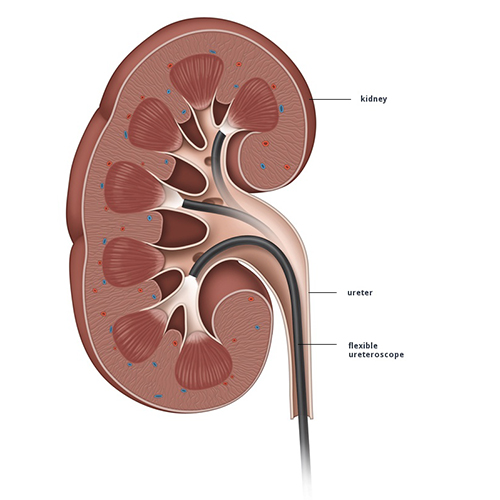
Retrograde Intrarenal Surgery (RIRS) is an advanced minimally invasive technique used to treat stones inside the kidney.
A flexible scope is guided through the urinary tract into the kidney
Stones in the renal pelvis or calyces are fragmented using a laser
Stone fragments are removed or allowed to pass naturally
When Is RIRS Recommended?
RIRS is ideal for:
Stones located deep inside the kidney
Stones not suitable for shockwave therapy
Small to medium-sized kidney stones (usually under 2 cm)
Key Differences Between URS and RIRS
Stone Location
URS: Ureter and lower kidney
RIRS: Inside the kidney (renal pelvis & calyces)
Complexity
URS: More direct, slightly simpler
RIRS: Deeper access into kidney, more precise
Stone Size
URS: Effective for medium to large ureteral stones
RIRS: Best for small to medium kidney stones
Both procedures are performed safely at Sarkar Hospital – Hospital Near Agra, using modern equipment and experienced urologists.
Effectiveness & Safety
Success Rates
URS has excellent success for ureteral stones
RIRS is highly effective for complex kidney stones
Complication Rates
Both procedures are safe with low risks. Minor risks include:
Mild bleeding
Infection
Temporary discomfort
All risks are minimized when performed by experienced surgeons at a specialized hospital near Agra.
Advantages of URS
Direct access to ureteral stones
Quick relief from pain and blockage
No surgical incisions
Short hospital stay
Advantages of RIRS
Best for kidney stones in complex anatomy
High precision laser fragmentation
Minimally invasive alternative to open surgery or PCNL
Faster recovery and minimal pain
FAQs
Most patients recover within a few days to one week
URS is better for larger ureteral stones, while RIRS suits kidney stones under 2 cm.
Both procedures are safe with minimal risks when performed by specialists.
In selected cases, yes—depending on stone location.
Both procedures cause minimal discomfort and are well tolerated.