
UPPER GI ENDOSCOPY (EGD)
What is an Upper GI Endoscopy?
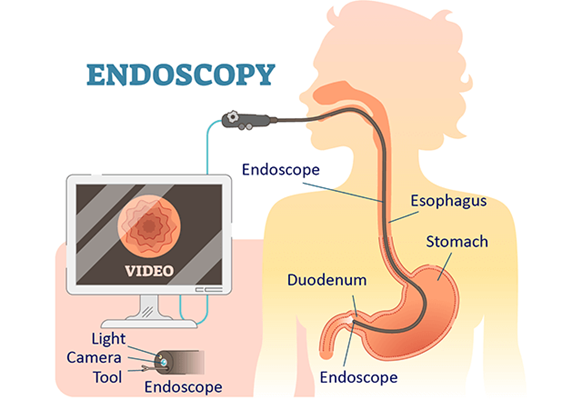
An Upper GI Endoscopy, also known as EGD (Esophagogastroduodenoscopy), is a medical procedure used to diagnose and treat problems of the upper gastrointestinal tract.
The upper GI tract includes:
Esophagus (food pipe)
Stomach
Duodenum (first part of the small intestine)
At Sarkar Hospital, Agra, this procedure is performed using a thin, flexible tube called an endoscope, which has a tiny camera and light at its tip. The endoscope is gently passed through the mouth to view the digestive tract on a monitor in real time.
Why is an Upper GI Endoscopy Done?
An upper GI endoscopy helps doctors identify the cause of digestive symptoms and treat conditions without the need for surgery.
Common Symptoms Evaluated:
Difficulty swallowing (dysphagia)
Persistent upper abdominal or chest pain (non-cardiac)
Unexplained weight loss
Continuous or unexplained vomiting
Bleeding from the upper digestive tract
Black or tarry stools
Conditions Diagnosed with Upper GI Endoscopy:
GERD (acid reflux disease)
Stomach or duodenal ulcers
Inflammation of the esophagus or stomach
Strictures (narrowed areas)
Esophageal varices
Tumors or polyps (benign or malignant)
Hiatal hernia
Celiac disease
Crohn’s disease (upper GI involvement)
Infections of the upper GI tract
Damage from swallowing harmful chemicals
Therapeutic Uses of Upper GI Endoscopy
In addition to diagnosis, upper GI endoscopy at Sarkar Hospital can be used to:
Control internal bleeding
Remove polyps or tumors
Dilate (open) narrowed areas
Remove stuck food or foreign objects
Perform laser or endoscopic procedures
Band esophageal varices
Take biopsy samples
Insert feeding tubes (PEG tube)
How to Prepare for an Upper GI Endoscopy
Your doctor will guide you, but general instructions include:
Do not eat or drink for at least 8 hours before the procedure
Inform your doctor if you:
Are pregnant
Have bleeding disorders
Take blood-thinning medicines (aspirin, warfarin, etc.)
Have allergies to medicines or anesthesia
You may be advised to stop certain medicines temporarily
You will be given a sedative, so arrange someone to take you home
What Happens During the Procedure?
The procedure is usually done as a day-care (outpatient) procedure.
During the Endoscopy:
You will be given a hospital gown
An IV line is placed for sedative medication
Vital signs are continuously monitored
Your throat is numbed with a spray to reduce gagging
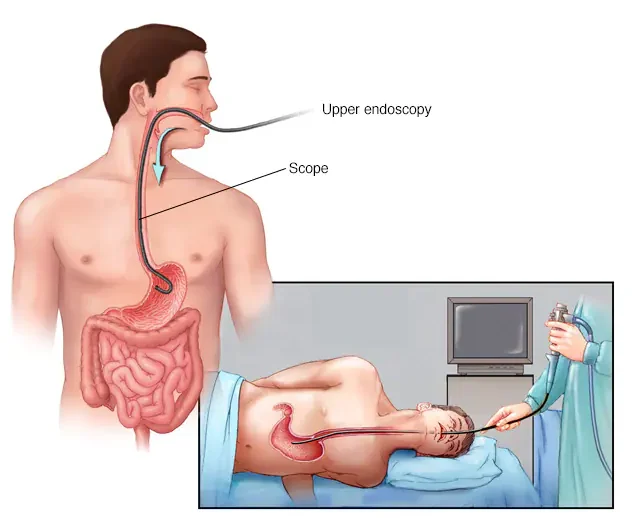
You lie on your left side
A mouth guard is placed for safety
The endoscope is gently passed through the mouth
Images are displayed on a monitor
Biopsy or treatment is done if required
The scope is removed once the procedure is complete
⏱ The procedure usually takes 15–30 minutes.
What Happens After the Procedure?
You’ll be observed in a recovery area until fully awake
You may experience:
Mild sore throat
Bloating or gas
You can eat and drink once your gag reflex returns
Normal activities can usually be resumed the same day
Someone must drive you home due to sedation