
What is MACS (Magnetic-activated cell sorting)?
MACS is an advanced sperm selection technique used to separate healthy, live sperm from damaged or apoptotic (dying) sperm cells.
Apoptosis is a natural process in which aging or damaged cells self-destruct at the end of their life cycle.
In the MACS procedure, apoptotic sperm cells are labeled with magnetic nanoparticles. When this sample passes through a special magnetic column, the damaged sperm are retained, while the intact, healthy sperm pass through and are collected for fertilization.
This technique helps in selecting better-quality sperm for assisted reproductive procedures such as IVF or ICSI, particularly in cases of male factor infertility where sperm DNA damage or poor morphology may be a concern.
However, recent meta-analysis studies have shown that while MACS can help improve sperm selection, it does not significantly increase embryo implantation or pregnancy rates compared to conventional selection methods.
How MACS Works?
MACS operates on the principle of utilizing magnetic fields to selectively isolate and separate cells based on specific characteristics. During IVF, this process is employed to enhance the quality of sperm and embryos used in the fertilization process. By targeting and enriching the desired cell populations, MACS helps optimize the chances of successful fertilization and embryo development.
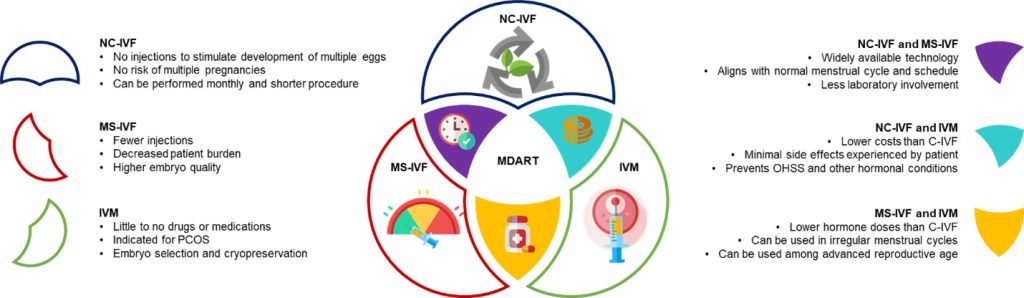
Alternative sperm selection techniques
1. ICSI (Intracytoplasmic Sperm Injection)
In this advanced procedure, a single healthy sperm is directly injected into a mature egg to achieve fertilization.
Ideal for: Men with low sperm count, poor motility, or abnormal morphology.
Note: While ICSI increases fertilization chances, it is a more complex technique and may carry a slightly higher risk of genetic abnormalities compared to natural fertilization.
2. IMSI (Intracytoplasmic Morphologically Selected Sperm Injection)
IMSI is an enhanced version of ICSI that uses ultra-high magnification microscopes to select sperm with the best shape and structure (morphology).
Ideal for: Patients with poor sperm morphology or previous failed IVF/ICSI cycles.
This technique can improve fertilization and embryo quality but involves higher cost and longer preparation time.
3. Sperm Washing (Swim-Up Method)
This simple technique separates healthy, motile sperm from semen by allowing them to swim up into a nutrient-rich medium.
Ideal for: Cases of mild male infertility or IUI (Intrauterine Insemination) treatments.
It’s a quick, affordable, and effective method but may not be suitable for severe sperm abnormalities.
4. Sperm DNA Fragmentation Test (SDFT)
This test evaluates the genetic integrity of sperm DNA, which is crucial for embryo development and pregnancy success.
Recommended for: Couples with unexplained infertility, recurrent miscarriages, or repeated IVF failures.
Identifying DNA damage helps in choosing the best treatment plan, although the test adds an extra cost.
5. Sperm Sorting (Density Gradient Centrifugation)
This technique separates sperm based on their density and motility, isolating the healthiest and most viable ones for fertilization.
Commonly used with: ICSI and IVF cycles to improve fertilization quality.
It’s reliable and widely practiced, though slightly labor-intensive and less effective in cases with very low sperm count.
Principle of Magnetic Cell Sorting
Magnetic-Activated Cell Sorting (MACS) is an advanced sperm selection technique based on the magnetic properties of cells. The method uses specialized magnetic nanoparticles that attach to damaged or apoptotic (dying) sperm cells.
When the semen sample passes through a magnetic field, these tagged sperm are retained, while healthy, motile sperm flow through and are collected for fertilization.
This allows for the precise isolation of the most viable sperm, improving the quality of the sample used for IVF or ICSI procedures.
For whom MACS is recommended?
At Sarkar Hospital, MACS may be recommended for:
Couples undergoing IVF or ICSI who require advanced sperm selection.
Men with high sperm DNA fragmentation or poor semen parameters.
Couples with repeated IVF failures or recurrent miscarriages.
Patients seeking to minimize the risk of genetic abnormalities in their embryos.
Our fertility experts carefully assess each patient’s condition to decide if MACS is appropriate and beneficial for their treatment plan.
Advantages of Using MACS
The integration of MACS technology in fertility treatment offers several potential advantages:
Enhanced selection of high-quality, live sperm for fertilization.
May help reduce genetic abnormalities and miscarriage risks.
Can potentially improve embryo quality and IVF success rates in specific cases.
Minimizes risk to embryos during the selection process.
Disadvantages of Using MACS
While MACS has advanced sperm selection standards, it is important to understand its limitations:
Higher treatment cost compared to routine sperm selection.
Requires specialized equipment and technical expertise.
Recent scientific studies and meta-analyses show no significant improvement in pregnancy or implantation rates compared to conventional IVF or ICSI techniques.