
LAPAROTOMY SURGERY AT SARKAR HOSPITAL, AGRA
Laparotomy is a surgical procedure in which an incision is made in the abdominal wall to gain access to internal organs. While minimally invasive surgeries are widely used today, laparotomy remains a vital and lifesaving procedure in complex, emergency, or advanced surgical conditions where smaller incisions are not sufficient.
At Sarkar Hospital, Agra, laparotomy is performed by experienced surgeons using advanced surgical protocols to ensure accurate diagnosis, effective treatment, and safe recovery.
What Is a Laparotomy?
A laparotomy is an open surgical procedure that allows surgeons to examine and treat organs within the abdominal and pelvic cavities. It is often performed for diagnostic (exploratory) or therapeutic purposes. The incision usually follows a vertical midline along the abdomen, providing wide and direct access to internal organs.
This procedure may also be referred to as celiotomy or peritoneotomy.
Types of Laparotomy Incisions
Depending on the medical condition, surgeons may choose different incision types:
Midline Incision – Vertical incision along the center of the abdomen
Paramedian Incision – Slightly off-center, offering targeted organ access
Transverse Incision – Horizontal incision for improved healing
Pfannenstiel (Bikini) Incision – Lower abdominal incision, commonly used in pelvic surgeries
Subcostal Incision – Diagonal incision under the rib cage
Rooftop (Chevron) Incision – Bilateral subcostal incision for upper abdominal access
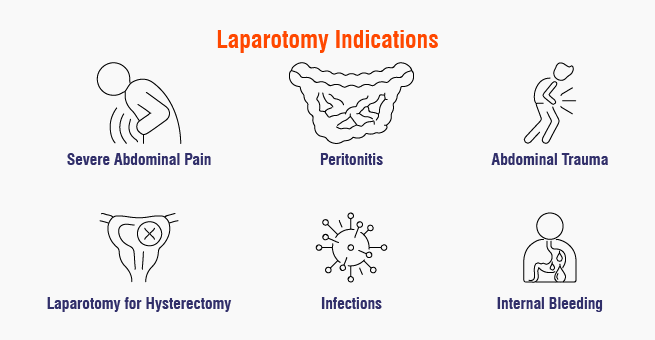
Indications for Laparotomy
Laparotomy may be recommended for diagnosing or treating conditions such as:
Severe or unexplained abdominal pain
Abdominal trauma or internal bleeding
Peritonitis (infection of the abdominal lining)
Perforated organs
Intra-abdominal infections
Tumors or large masses
Emergency appendectomy
Hysterectomy
Splenectomy
Ovarian cysts and endometriosis
Cancer staging (ovarian, pancreatic, lymphoma, etc.)
The procedure allows evaluation of organs including the stomach, liver, gallbladder, pancreas, intestines, spleen, kidneys, bladder, and reproductive organs.
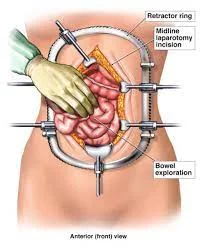
Laparotomy Procedure
The surgery is performed under general anesthesia. The surgeon makes an incision through the abdominal wall to access internal organs. Once the underlying condition is identified, corrective surgical treatment is carried out during the same procedure whenever possible. After completion, the incision is carefully closed with sutures.
Benefits of Laparotomy
Direct and clear visualization of abdominal organs
Immediate intervention in life-threatening emergencies
Effective management of complex or extensive conditions
Better control of bleeding and infections
Flexibility to perform multiple surgical procedures in one operation
Possible Risks
Although generally safe, laparotomy may involve risks such as:
Infection or delayed wound healing
Excessive bleeding
Injury to nearby organs
Formation of internal scar tissue (adhesions)
Intestinal obstruction
Incisional hernia
Our surgical team at Sarkar Hospital takes all necessary precautions to minimize these risks
Recovery After Laparotomy
Recovery time varies depending on the patient’s health and the complexity of surgery. Most patients require 4–6 weeks for initial recovery. Gradual return to normal activities is advised, following the surgeon’s guidance. Full abdominal strength may take several months to restore.