
Advanced Airway Management at Sarkar Hospital, Agra
What is Intubation?
Intubation is a medical procedure in which a healthcare provider inserts a breathing tube through the mouth or nose into the windpipe (trachea). This tube keeps the airway open and allows air or oxygen to reach the lungs.
The tube is usually connected to a ventilator (mechanical breathing machine) that helps or completely supports breathing when a patient cannot breathe adequately on their own.
Other Names for Intubation:
-
Airway Intubation
-
Endotracheal Intubation (ETT)
-
Tracheal Intubation
Why is Intubation Needed?
At Sarkar Hospital, Agra, intubation is performed as a life-saving emergency or planned procedure when a patient is unable to maintain a safe airway or breathe properly.
Common Reasons for Intubation:
-
Respiratory failure
-
Severe breathing difficulty or low oxygen levels
-
Loss of consciousness or coma
-
Cardiac arrest (heart stopping)
-
Severe trauma to chest, neck, or airway
-
Airway blockage (foreign body, swelling, injury)
-
Risk of aspiration (food, vomit, blood entering lungs)
-
During major surgeries requiring anesthesia
-
Temporary stoppage of breathing (apnea)
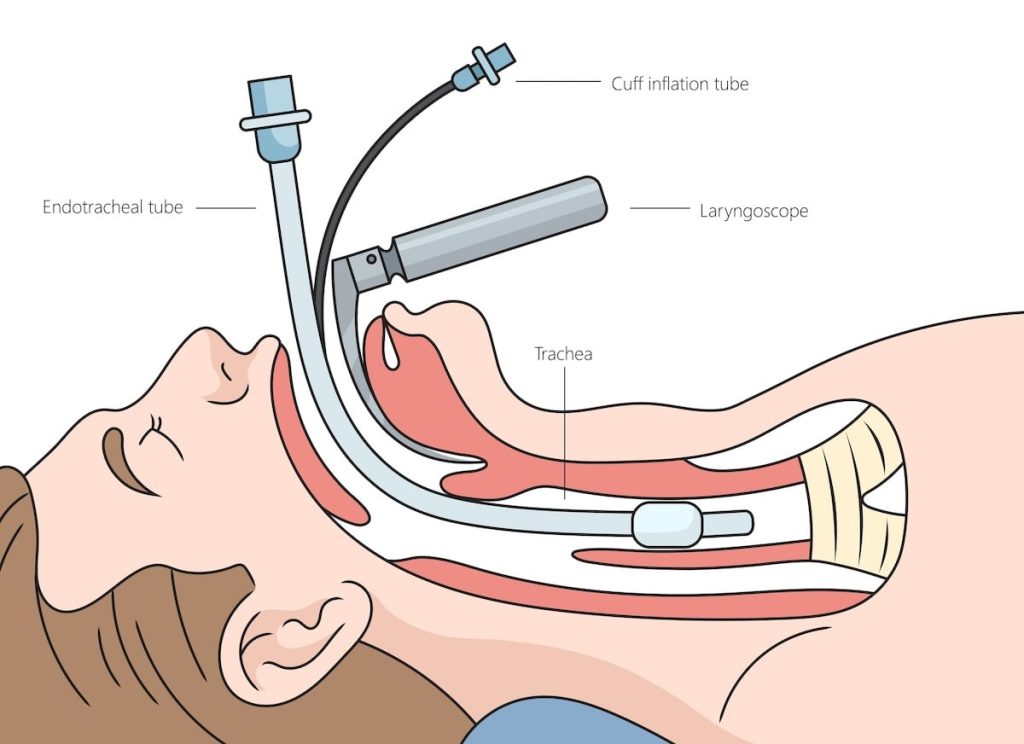
How is Intubation Performed?
Intubation is usually performed in the ICU, operation theatre, or emergency department by trained doctors and anesthetists.
Steps of Endotracheal Intubation:
-
An IV line is placed for medications
-
Sedation or anesthesia is given so the patient feels no pain
-
Oxygen is provided before the procedure
-
A special instrument called a laryngoscope is used to visualize the airway
-
The breathing tube is gently inserted into the trachea
-
A small balloon at the tube’s tip is inflated to keep it in place
-
The tube is secured and connected to a ventilator
-
Correct placement is confirmed by breath sounds and chest X-ray
⏱ In emergencies, intubation can be completed in less than one minute.
What is Extubation (Removal of the Tube)?
Extubation is the safe removal of the breathing tube once the patient can breathe independently.
During Extubation:
-
Secretions are suctioned
-
The balloon is deflated
-
The tube is gently removed
-
The patient may be asked to cough or breathe deeply
Temporary sore throat or hoarseness is common and usually improves within a few days.
Benefits of Intubation
-
Maintains a secure airway
-
Ensures adequate oxygen delivery
-
Supports life during critical illness
-
Allows safe anesthesia during surgery
-
Prevents aspiration and respiratory collapse
Intubation is a widely used, effective, and life-saving procedure.

Possible Risks of Intubation
Although generally safe, risks may include:
-
Aspiration of fluids
-
Injury to teeth, lips, tongue, or vocal cords
-
Infection (sinus or lung)
-
Tube misplacement (rare but serious)
-
Low blood pressure or lung injury
-
Temporary voice or throat discomfort
At Sarkar Hospital, these risks are minimized through experienced ICU teams, strict protocols, and continuous monitoring.
When is Intubation Not Advised?
In rare cases where intubation is unsafe due to severe airway damage or obstruction, doctors may perform a TRACHEOSTOMY, a surgical opening in the neck to secure breathing.
Recovery After Intubation
-
Most patients recover within hours to a few days
-
Mild throat pain or voice changes may occur temporarily
-
Long-term issues are uncommon with proper care