
ERCP (ENDOSCOPIC RETROGRADE CHOLANGIOPANCREATOGRAPHY)
ERCP (Endoscopic Retrograde Cholangiopancreatography) is a specialised diagnostic and therapeutic procedure used to examine and treat problems of the bile ducts, gallbladder, liver, and pancreas.
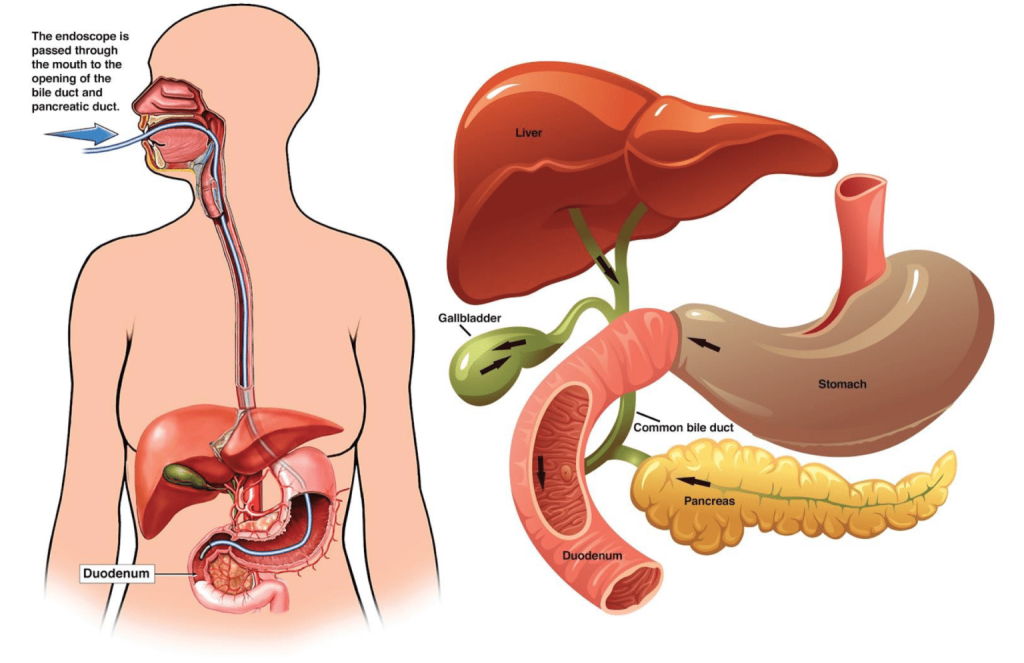
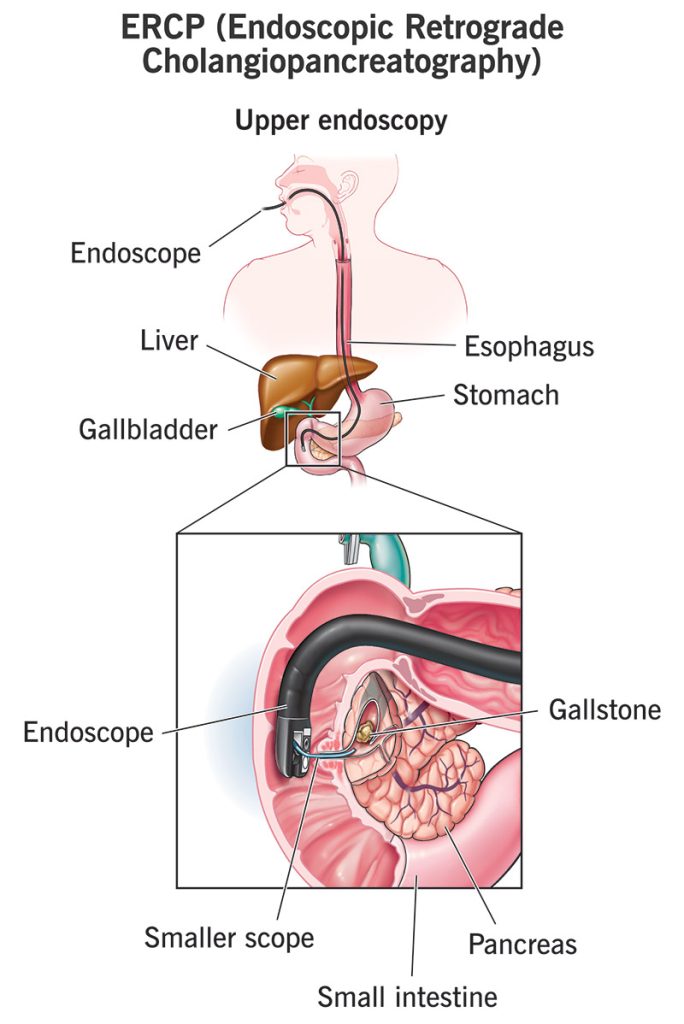
During an ERCP, a thin flexible tube with a tiny camera (endoscope) is passed through the mouth, throat, stomach, and into the small intestine, allowing doctors to access the bile and pancreatic ducts. A contrast dye is injected, and X-ray imaging helps identify blockages, leaks, or abnormalities. In many cases, treatment can be done during the same procedure.
At Sarkar Hospital, Agra, ERCP is performed by experienced gastroenterologists using advanced endoscopy and imaging technology for safe and accurate results.
What is ERCP?
ERCP combines:
Endoscopy – to directly view the digestive tract
Fluoroscopy (real-time X-ray imaging) – to visualise bile and pancreatic ducts
This allows doctors to both diagnose and treat conditions affecting the biliary and pancreatic systems in a minimally invasive way.
Why is ERCP Done?
Your doctor may recommend ERCP if you have symptoms suggesting a biliary or pancreatic problem, such as:
Persistent or unexplained upper abdominal pain
Jaundice (yellowing of skin or eyes)
Dark urine or pale stools
Fever with abdominal pain
Suspected bile duct blockage
Conditions Diagnosed or Treated with ERCP
ERCP helps identify and manage:
Gallstones in the bile duct
Biliary strictures (narrowing due to scarring)
Cholangitis (infection of bile ducts)
Gallstone pancreatitis
Tumors or cancers of bile or pancreatic ducts
Bile duct leaks or injuries
Pancreatic duct abnormalities
Who Performs ERCP?
ERCP is performed by a gastroenterologist, a specialist trained in digestive system disorders and advanced endoscopic procedures.
At Sarkar Hospital, ERCP is conducted by skilled specialists with extensive experience in therapeutic endoscopy
How Does ERCP Work?
ERCP combines endoscopy with fluoroscopy:
A contrast dye is injected into the bile and pancreatic ducts
X-ray images track the flow of dye
This helps detect blockages, leaks, swelling, or narrowing
Special tools passed through the endoscope allow immediate treatment
How to Prepare for ERCP?
Before the procedure, patients are advised to:
Avoid eating, drinking, smoking, or chewing gum for 8 hours
Inform the doctor about existing medical conditions
Discuss current medications, especially blood thinners
Inform about any allergy to contrast dye or anesthesia
Arrange a driver to take you home, as sedation effects last up to 24 hours
ERCP Procedure – Step by Step
Patient admission and IV sedation
Throat numbing spray (if required)
Endoscope passed through mouth to small intestine
Identification of bile and pancreatic duct opening
Injection of contrast dye
Real-time X-ray imaging (fluoroscopy)
Diagnosis and treatment during the same session, if needed
Treatments Performed During ERCP
If a problem is found, the doctor may:
Remove or break gallstones
Place a stent to keep a duct open
Widen narrowed ducts (dilation)
Repair bile duct leaks
Remove tissue or take biopsy
Perform sphincterotomy (small cut to open the duct opening)
After the ERCP Procedure
Observation for 1–2 hours until sedation wears off
Discharge on the same day
Mild symptoms may include:
Sore throat
Bloating or gas
Nausea
Most symptoms resolve within 1–2 days
Risks and Complications
ERCP is generally safe, though complications occur in 5–10% of cases, including:
Pancreatitis (inflammation of pancreas)
Infection of bile ducts
Bleeding or injury to GI tract
Allergic reaction to contrast dye
Reaction to sedation or anesthesia
Special precautions are taken for pregnant patients to minimise radiation exposure.