
PRP – Platelet Rich Plasma therapy in infertility
Platelets are blood cells that have a unique ability to divide rapidly. They are very rich in cytokines and many other growth-promoting factors. Activation and enrichment of platelets make them even more capable functionally. PRP is used as a rejuvenation tool in many areas of medicine. PRP helps in the growth of the tissues.
Applications of PRP fertility treatment
At Sarkar Hospital, Agra, Platelet-Rich Plasma (PRP) Therapy is used as an advanced regenerative treatment to enhance fertility outcomes in women with poor ovarian response or thin endometrium. PRP utilizes the patient’s own blood platelets, enriched with growth factors, to stimulate natural healing and tissue regeneration in reproductive organs.
1. Ovarian Rejuvenation
In women with low ovarian reserve, poor egg quality, or premature ovarian aging, PRP therapy can significantly improve ovarian function.
A concentrated and activated PRP solution is injected directly into the ovaries, stimulating follicular activity and improving egg production.
At Sarkar Hospital, this treatment has helped many women with low fertility potential achieve successful and even natural pregnancies, offering new hope to those previously advised for egg donation.
2. Endometrial Rejuvenation
Damage to the endometrial lining—the inner layer of the uterus—can occur due to infections, surgeries, miscarriages, or uterine adhesions. A thin or scarred endometrium can prevent implantation and lower pregnancy success rates.
PRP therapy for endometrial rejuvenation helps repair and regenerate the uterine lining, making it more receptive for embryo implantation.
Procedure Options:
Simple Catheter-Based PRP Infusion:
The PRP concentrate is injected into the uterus through a small, soft catheter. It coats the uterine lining and is gradually absorbed into the functional layer to promote tissue repair.
(A small proportion of PRP may remain unabsorbed with this approach.)Hysteroscopy-Guided PRP Injection:
In cases of severe endometrial scarring or adhesions, PRP can be precisely delivered under hysteroscopic guidance after surgical correction.
This method ensures better contact with the uterine lining and enhanced absorption for improved endometrial recovery.
By improving endometrial thickness, vascularity, and receptivity, PRP therapy can help women with thin or damaged uterine lining achieve successful pregnancies.
Benefits of PRP in Fertility Management
Promotes natural tissue regeneration.
Improves ovarian and endometrial function.
Increases pregnancy and implantation rates.
Minimally invasive and safe, using the patient’s own blood.
Useful for women with poor ovarian reserve or thin endometrium unresponsive to other treatments.
Who should consider PRP fertility treatment?
PRP (Platelet-Rich Plasma) therapy can be a promising option for couples struggling with infertility due to poor ovarian function, thin endometrium, or recurrent implantation failures. Since PRP uses the body’s own regenerative potential, it offers a natural and safe method to enhance reproductive outcomes.
1. Women with Diminished Ovarian Reserve
Women with a low egg count or poor egg quality may benefit from PRP therapy. Injecting activated PRP into the ovaries can help stimulate follicular growth, improve egg maturation, and enhance ovarian function.
This treatment is particularly helpful for women who have shown a weak response to fertility medications or have been advised for donor egg IVF.
2. Women with Recurrent Implantation Failure
PRP therapy may also support women undergoing IVF who experience repeated embryo implantation failures despite good-quality embryos.
In these cases, endometrial PRP can enhance the thickness and receptivity of the uterine lining, increasing the chances of successful implantation.
In addition, PRP may help improve immune tolerance of the uterine lining — a vital mechanism that allows the uterus to accept an embryo containing both maternal and paternal genetic material.
Low immune tolerance can lead to implantation failure, and while evidence in this area is still emerging, PRP may positively influence this process and improve implantation potential.
3. Men with Male Factor Infertility
Though still under research, PRP therapy may hold potential for men with low sperm count, poor motility, or reduced sperm quality.
By stimulating regenerative processes in the testicular tissue, PRP could help improve sperm function and quality in selected cases.
This field of treatment is still under scientific development, and ongoing studies are evaluating its full therapeutic benefits.
Procedure Of PRP Preparation
At Sarkar Hospital, Agra, PRP (Platelet-Rich Plasma) therapy is performed with precision and care to ensure maximum safety and effectiveness. The process involves several systematic steps — from evaluation to post-treatment care — all carried out under strict sterile conditions.
1. Patient Evaluation and Consultation
The procedure begins with a detailed consultation and assessment of the patient’s medical history, hormonal profile, and fertility status. This evaluation helps determine if PRP therapy is suitable and tailor the treatment plan according to individual needs.
2. Blood Collection
Once the decision is made to proceed, a small amount of blood is drawn from the patient’s arm — similar to a routine blood test. This simple and quick step provides the sample needed to prepare the PRP concentrate.
3. Blood Processing
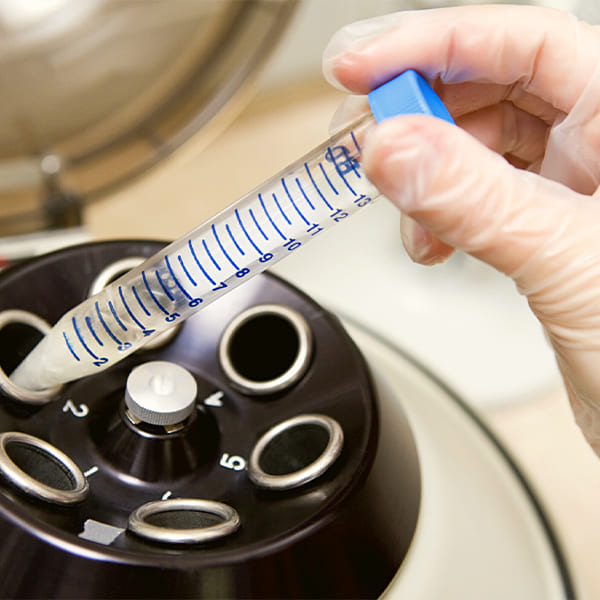
The collected blood is processed in a specialized centrifuge machine, which spins it at high speed. This separates the blood into distinct layers based on density — red blood cells, white blood cells, and plasma. The entire process takes approximately 10 to 15 minutes.
4. Separation of Platelet-Rich Plasma
After centrifugation, the plasma layer rich in platelets is carefully extracted using sterile techniques. This platelet-rich plasma (PRP) is the key component that contains powerful growth factors essential for tissue regeneration and healing.
5. Platelet Activation (Optional Step)
In certain cases, the PRP may be activated using agents like calcium chloride or thrombin. This process helps platelets release their stored growth factors, enhancing the regenerative effect when injected into the targeted tissue.
6. Preparation for Application
Once activated, the PRP is prepared for use. Depending on the treatment objective — whether ovarian rejuvenation or endometrial PRP — the preparation technique may vary slightly to ensure optimal concentration and delivery.
7. Application of PRP
The prepared PRP is administered directly to the treatment site through one of the following methods:
Injection into the ovaries for ovarian rejuvenation.
Injection into the uterine lining using hysteroscopic guidance.
Insertion into the uterus through a fine soft catheter.
The chosen method depends on the patient’s diagnosis and fertility goals.
8. Post-Treatment Care
After the procedure, patients receive personalized instructions to enhance recovery and optimize the treatment outcome. This may include lifestyle guidance, follow-up medications, or mild activity restrictions for a short period.
9. Monitoring and Follow-Up
Patients are closely monitored after PRP therapy to evaluate the response and progress. Follow-up appointments are scheduled to track hormonal changes, ovarian function, endometrial growth, or other clinical outcomes.
How is PRP used for IVF and other fertility treatments?
PRP therapy is increasingly being utilized in conjunction with assisted reproductive technologies such as IVF (In Vitro Fertilization) and IUI (Intrauterine Insemination) to enhance fertility outcomes. In IVF, PRP can be injected into the uterus to improve endometrial thickness and the receptivity of the endometrium. PRP can be injected in the ovaries to increase egg number and improve ovarian micro-environment.
What is the cost of PRP for IVF?
The cost of PRP (Platelet-Rich Plasma) therapy for IVF can vary based on several factors — including the site of injection (ovarian or endometrial), the complexity of the case, the clinic facilities, and whether repeat sessions are required.
At Sarkar Hospital, Agra, we ensure transparent and affordable pricing, offering personalized packages based on each patient’s fertility goals and medical condition. Your fertility specialist will guide you about the most suitable plan after a thorough evaluation.
What can one expect during the Intraovarian PRP Therapy procedure?
Intra-ovarian PRP therapy is a quick and minimally invasive procedure designed to stimulate ovarian function and improve egg quality.
During the procedure:
The patient is given local or short general anesthesia to ensure comfort.
Using ultrasound guidance, a thin needle is carefully inserted into each ovary.
PRP concentrate, prepared from the patient’s own blood, is gently injected into the ovarian tissue.
The procedure takes about 15–20 minutes and is performed on a day-care basis, allowing patients to return home the same day.
Advantages of PRP therapy
Uses your own blood – Since PRP is derived from your own blood, there’s no risk of allergic reaction or rejection.
Simple and minimally invasive – No major surgery or hospitalization required; the recovery period is minimal.
Cost-effective – Compared to long-term medical treatments or surgical options, PRP is more affordable and requires fewer follow-ups.
Promotes natural healing – Rich in growth factors, PRP enhances cell regeneration, tissue repair, and ovarian rejuvenation.
Long-lasting results – PRP addresses the root cause by stimulating natural healing processes, and benefits may last several months or longer.
Disadvantages and Limitations of PRP therapy
Variable effectiveness – Results may differ from person to person; some patients may experience limited improvement.
Limited research data – Though early outcomes are encouraging, more scientific studies are needed for standardized results.
Multiple sessions may be needed – Certain patients require more than one session to achieve optimal benefits.
Not a standalone treatment – PRP may be used as an adjunct to IVF or other fertility treatments for better results.
Individual response varies – Age, health, and fertility status influence how well the body responds to PRP.
Side Effects of PRP Therapy
PRP therapy is generally very safe, as it uses the patient’s own blood. However, mild and temporary side effects may occur, including:
Pain or mild discomfort at the injection site
Temporary swelling or bruising
Low-grade infection (rare)
Mild allergic or inflammatory reaction (very rare)
All procedures at Sarkar Hospital are performed under sterile conditions by trained fertility specialists to minimize any risks.
What are the success rates of PRP therapy in improving fertility outcomes?
The success of PRP therapy depends on several factors, including age, ovarian reserve, hormone profile, and underlying fertility concerns.
Studies and clinical observations have shown promising improvements in:
Egg quality and ovarian function in women with diminished ovarian reserve
Endometrial thickness and receptivity, improving embryo implantation rates
However, PRP therapy is still an evolving treatment, and ongoing research continues to refine its protocols and optimize results.