
Fibroids
Fibroids are noncancerous growth from the uterine muscle. It is estimated that 60 to 80% of women will develop fibroid during their lifetime. Fibroids are also called myomas or leiomyomas.
What are fibroids?
Understanding, Diagnosing, and Managing Fibroids at Sarkar Hospital, Agra
The uterus is a vital reproductive organ made up of three distinct layers:
Endometrium (Inner Layer): Builds up every month and sheds during menstruation.
Myometrium (Middle Muscle Layer): Forms the main bulk of the uterus.
Serosa (Outer Layer): A smooth, thin outer covering.
Fibroids, also known as leiomyomas or myomas, develop from the middle muscle layer (myometrium). These are non-cancerous (benign) growths, and the chance of them becoming cancerous is extremely rare.
Because of this, women who do not have any symptoms can often choose observation and regular monitoring instead of surgery.
What Are Fibroids?
Fibroids can be single or multiple and may range in size — from very small nodules invisible to the naked eye, to large masses that can make the uterus grow as big as a watermelon or more.
Symptoms
Many women with fibroids experience no symptoms at all, and fibroids are often discovered incidentally during a routine pelvic examination or ultrasound.
When symptoms do occur, they may include:
Heavy or prolonged menstrual bleeding
Anaemia due to blood loss, causing fatigue and breathlessness
Pelvic pressure or fullness due to large fibroids
Pelvic or lower back pain
Frequent urination (if fibroid presses on the bladder)
Constipation (if it presses on the rectum)
Note: Painful periods are not typically caused by fibroids, so other uterine problems should be ruled out if pain is significant.
Causes of Fibroids
The exact cause of fibroid development is not fully understood, but several factors are known to influence their growth:
Hormonal Imbalance: Estrogen and progesterone can stimulate fibroid growth.
Genetic Factors: Fibroids often run in families.
Growth Factors: Substances like insulin-like growth factor may promote fibroid growth.
Excess Extracellular Matrix (ECM): Makes fibroids fibrous and helps them grow.
Body Weight: Overweight individuals have higher estrogen levels, increasing risk.
Early Menstruation: Starting periods at a young age raises the risk.
Vitamin D Deficiency: Linked with a higher incidence of fibroids.
Diet and Lifestyle: High intake of red meat and low intake of green vegetables may increase risk.
Environmental Factors: Exposure to certain chemicals or pollutants may contribute.
Pregnancy: Hormonal changes during pregnancy can actually protect against fibroid formation.
Types of Fibroids
Fibroids are classified based on where they grow in the uterus:
Subserosal Fibroids: Grow on the outer surface of the uterus.
Intramural Fibroids: Grow within the muscular wall of the uterus (most common type).
Submucosal Fibroids: Grow inside the uterine cavity, often causing heavy bleeding and fertility issues.
Why Fibroids Develop
While the exact reason fibroids develop is still unclear, it is well-known that they thrive in estrogen-rich environments.
They tend to grow during the reproductive years, when estrogen levels are high.
After menopause, when estrogen levels naturally decline, fibroids typically shrink or stop growing.
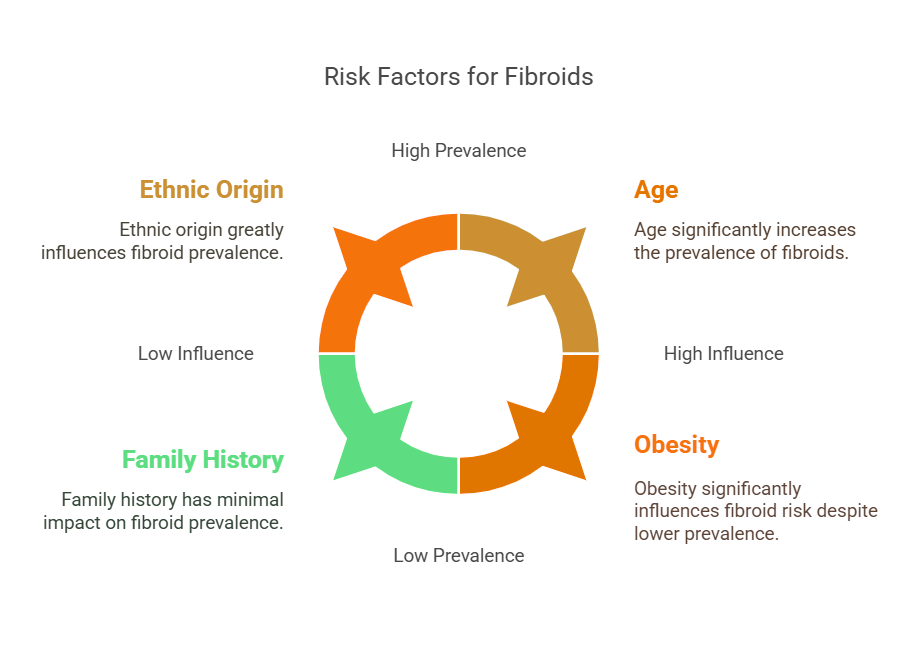
Common Risk Factors
Women are more likely to develop fibroids if they have:
A family history of fibroids
Early onset of menstruation
Obesity or excess body weight
Vitamin D deficiency
High red meat intake and low vegetable consumption
Hormonal imbalance or high estrogen exposure
How does fibroid affect fertility?
According to the American Society for Reproductive Medicine, fibroids affect 5–10% of infertile women.
Fibroids may alter the shape or size of the uterine lining, where the embryo implants, or interfere with the blood supply to the uterine wall, affecting implantation. While the exact mechanism isn’t fully understood, larger fibroids or those distorting the uterine cavity are more likely to impact fertility.
The decision to remove a fibroid depends on its size, number, and location, as well as other factors contributing to infertility.
At Bavishi Fertility Institute, we provide expert guidance on fibroid management — helping you decide whether fibroid removal is necessary. Our team offers unmatched surgical expertise and exceptional safety standards for the best possible outcomes.
Pregnancy with fibroids

Women with fibroids can conceive and carry a pregnancy successfully, but fibroids may slightly increase the risk of pregnancy complications such as:
Preterm birth
Need for Caesarean section (C-section)
Abnormal position of the baby or placenta
Routine fibroid removal before pregnancy is usually not recommended, unless:
You’ve had a previous adverse pregnancy outcome, or
The fibroids are very large and likely to interfere with conception or pregnancy.
Although fibroids are sometimes associated with miscarriage, recent research suggests fibroids alone rarely cause miscarriage.
Diagnosis
Ultrasound (Abdominal or Vaginal):
Usually sufficient to diagnose fibroids.MRI:
Used when fibroids need to be differentiated from adenomyosis, another benign uterine condition. MRI provides clearer distinction between the two.
Treatment
1. Medicines
Medications can help control symptoms or shrink fibroids temporarily. Options include:
GnRH agonists
Hormone-releasing intrauterine devices (IUDs)
Birth control pills
However, these are not suitable for everyone. The best treatment depends on your age, fibroid size, symptoms, and ovarian function.
At Bavishi Fertility Institute, our experts help you choose the most effective and individualized treatment plan.
2. Surgery
Surgery is often the most effective treatment when fertility preservation is a priority.
Myomectomy
A procedure that removes only the fibroids while keeping the uterus intact.
It can be performed by:
Hysteroscopy: For fibroids within the uterine cavity (submucous fibroids) using a scope through the vagina.
Laparoscopy: For fibroids on the outer or inner walls of the uterus using small abdominal incisions and a camera.
Hysterectomy
Complete removal of the uterus — suitable for women who have completed their family.
Performed via laparoscopy, abdominal, or vaginal surgery.
Since hysterectomy may affect ovarian function, it is generally avoided in women under 40 unless absolutely necessary.
3. Uterine Artery Embolization (UAE)
A minimally invasive procedure where small particles are injected into the uterine arteries to block blood flow to fibroids, causing them to shrink.
It is ideal for women unfit for surgery, though it may reduce fertility potential.
4. MRI-Guided Focused Ultrasound
This non-surgical option uses high-frequency ultrasound waves focused on the fibroid to heat and destroy fibroid tissue without affecting surrounding areas.
Multiple sessions may be required, and availability is limited to specialized centers.