
In Vitro Fertilitzation (IVF)
What is IVF?
In Vitro Fertilization (IVF) is an advanced assisted reproduction technique in which an egg is fertilized with sperm in the laboratory. The resulting embryo is then transferred into the woman’s uterus to achieve pregnancy.
IVF is short for In Vitro (outside the body) Fertilization (fusion of egg and sperm). Since the first successful IVF was performed in a test tube, it is also commonly known as the “test tube baby” technique.
IVF refers to any treatment where eggs are retrieved from the female body, fertilized and grown in the lab, and the resulting embryos are transferred into the uterus. As the eggs and embryos are cultured outside the body, we can use advanced technologies to increase the chances of success. IVF is the only treatment where embryos can be directly placed at their final destination — the uterus.
Advantages of IVF
Know the exact number and quality of embryos formed.
Select and transfer the best quality embryos.
Freeze extra embryos for future use (if available).
Use advanced techniques to improve fertilization and implantation.
Perform genetic testing on embryos when required.
Across the world, more than 5 million healthy babies have been born with IVF, and the number continues to grow rapidly.
In Vitro Fertilization IVF Process Step by step
At Sarkar Hospital, Agra, we follow a structured and personalized IVF process with 5 major steps:
Pre-treatment evaluation
Stimulation
Oocyte (egg) retrieval & fertilization
Embryo transfer
Pregnancy test
Start your journey toward a rewarding healthcare career with our Operation Theatre (OT) Technician program.
This comprehensive 2-year course prepares students to assist surgeons and medical staff in operation theatres, manage equipment, maintain sterile conditions, and ensure patient safety during surgical procedures.
Eligibility: 12th Pass (PCB / PCM)
Duration: 2 Years
Pre-treatment evaluation
We believe in thorough evaluation of the couple before starting IVF to optimize outcomes. Only necessary tests are recommended.
Male Partner
Blood tests
Semen analysis
Semen freezing
Special tests if needed
Female Partner
Consultation & examination
3D sonography
Blood tests
Hysteroscopy (if required)
Special or fitness tests (if needed
Stimulation
We provide tailor-made stimulation protocols for every couple. The process begins after menstruation with hormone injections (FSH or HMG) to produce multiple mature eggs.
Types of Stimulation Protocols:
Antagonist protocol (Short protocol)
Down-regulation protocol (Long protocol)
Flare protocol
Dual stimulation protocol
Minimal stimulation protocol
Other customized plans
Injections are given once daily for 7–12 days, with regular ultrasounds to monitor response.
Induction of Ovulation – Trigger
Once follicles are ready, a final injection (GnRH agonist or hCG) is given to mature the eggs. At Sarkar Hospital, we carefully select the most appropriate “trigger” to ensure the best quality eggs safely.
Oocyte retrieval and fertilization
Oocyte Retrieval (Egg Collection)
Done 34–36 hours after trigger
A minor, painless procedure under short anesthesia
No cuts or stitches (performed vaginally under ultrasound guidance)
Same-day discharge (after 2 hours observation)
Sperm Preparation & Fertilization
On the same day, semen is collected and processed.
The best quality motile, normal-shaped sperm are selected.
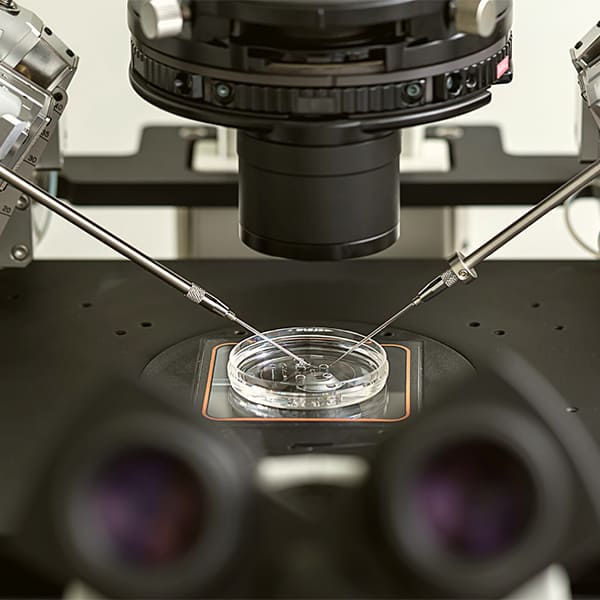
Fertilization is performed via ICSI (Intracytoplasmic Sperm Injection) where one sperm is injected into one egg to maximize chances of success.
Embryo Culture
Fertilized eggs are cultured in advanced incubators replicating the human body environment.
Embryos are grown for up to 6 days under the care of expert embryologists.
Sarkar Hospital is equipped with state-of-the-art IVF labs to ensure high-quality embryo development.
Embryo Transfer
Carried out 2–6 days after fertilization.
A gentle, painless procedure without anesthesia.
Usually 1–3 embryos are transferred, depending on medical advice and patient preference.
Remaining embryos can be frozen through vitrification with nearly 100% survival rates for future use.
Pregnancy Test
Conducted 13–15 days after embryo transfer.
Performed through a blood test (Beta hCG) to confirm pregnancy.
In which cases IVF is recommended?
Failed simpler treatments (IUI, ovulation induction, etc.)
Blocked or damaged fallopian tubes (hydrosalpinx)
Severe endometriosis or chocolate cysts
Low egg reserve, advanced age, or early menopause
Poor sperm count, low motility, or abnormal sperm shape
Azoospermia (sperm retrieved via biopsy)
Unexplained infertility

Other applications for IVF
Donor Eggs: For women with low or no egg reserve.
Surrogacy: IVF is essential for surrogacy programs.
Natural IVF Cycle: Uses a woman’s natural cycle with minimal or no medication.
Genetic Testing (PGT): To prevent transmission of genetic diseases like thalassemia.
Natural IVF Cycle
Natural IVF (Natural In Vitro Fertilization) is a gentler variation of traditional IVF that minimizes the use of fertility medications. Instead of stimulating the ovaries to produce multiple eggs, Natural IVF works with the woman’s own natural hormonal cycle to retrieve and fertilize a single egg.
How Natural IVF Works
Monitoring: Ultrasounds and blood tests are performed to track natural egg growth and development.
Egg Retrieval: Once the egg reaches maturity, it is retrieved using a minor surgical procedure under ultrasound guidance.
Fertilization: The retrieved egg is fertilized with sperm in the laboratory.
Embryo Transfer: If fertilization is successful, the embryo is transferred into the uterus.
Pregnancy Test: A blood test (Beta hCG) is performed after about two weeks to confirm pregnancy.

Genetic Disorder Prevention with IVF (PGT)
Some families carry genetic conditions such as thalassemia or other inherited disorders. At Sarkar Hospital, we can combine IVF with Preimplantation Genetic Testing (PGT)
The actual IVF treatment cycle (egg stimulation to embryo transfer) takes about 12–17 days, depending on the protocol.
Sarkar Hospital, Agra is a pioneer in the smart and careful use of the latest assisted reproductive technologies (ART) to deliver the best possible outcomes. IVF continues to offer the highest success rate compared to other fertility treatments, and at our hospital, we integrate many advanced techniques and technologies to make IVF safer, more effective, and more successful.
Multiple pregnancies (twins, triplets)
Ovarian Hyperstimulation Syndrome (OHSS)
Ectopic pregnancy
Risks from egg retrieval (bleeding, infection, rarely organ injury)
Emotional & psychological stress
Financial costs (multiple cycles may be required)
👩⚕️ Expert Team: Experienced fertility specialists & embryologists.
🧪 Advanced Technology: Latest IVF labs, incubators & genetic testing.
🏥 Comprehensive Care: IVF, ICSI, egg freezing, surrogacy under one roof.
📈 High Success Rates: Among the leading IVF centers in Agra.
🌿 Holistic Support: Focus on health, nutrition & emotional well-being.
🤝 Ethical & Transparent: Clear communication, no hidden costs.
🌍 Trusted Name: Hundreds of successful fertility journeys in Agra & beyond.

FAQs
At Sarkar Hospital, Agra, we guide couples on the right time to seek fertility assistance:
Under 35 years of age: Try naturally for up to 12 months before considering IVF or other treatments.
35 years or older: Try for 6 months, as fertility naturally declines with age.
Over 40 years of age or in cases of known fertility problems (blocked tubes, low sperm count, irregular periods, genetic disorders, etc.): It is advisable to seek medical help immediately without waiting.
At Sarkar Hospital, Agra, we advise couples to adopt a healthy lifestyle before starting an IVF cycle, as it can significantly improve the chances of success. Both partners should maintain a balanced diet rich in fruits, vegetables, whole grains, and lean proteins, along with regular moderate exercise to support a healthy weight and reduce stress.
At Sarkar Hospital, Agra, IVF involves placing many sperm with an egg in a lab dish to allow natural fertilization, while ICSI uses a single sperm injected directly into an egg. ICSI is recommended in cases of severe male infertility (low count, poor motility, abnormal sperm), when sperm is surgically retrieved, or if previous IVF attempts have failed.
There are no strict dietary restrictions during IVF, but at Sarkar Hospital, Agra we recommend following a balanced diet rich in fruits, vegetables, whole grains, and lean proteins. Couples should stay well-hydrated, limit caffeine, and avoid foods high in trans fats. In some cases, the doctor may provide specific dietary advice tailored to individual health needs.
Age plays a major role in the success of IVF. Younger women generally have higher success rates because egg quality and quantity are better at a younger age. As a woman’s age increases, especially after 35, egg reserve and quality naturally decline, which can reduce IVF outcomes.
Embryo grading plays a key role in the IVF process. It is the method of assessing embryos based on their growth, appearance, and development in the lab. Higher-grade embryos have a better chance of implantation and successful pregnancy. At Sarkar Hospital, Agra, embryo grading helps our specialists select the best embryos for transfer, which significantly improves the chances of success while also allowing the option to freeze good-quality embryos for future use
Yes, IVF can help single men or women who wish to become parents through the use of a gestational carrier (surrogate mother). For single men, sperm is collected and used to fertilize a donor egg, and the resulting embryo is transferred into the gestational carrier’s uterus. For single women, donor sperm is used to fertilize their own egg (or a donor egg if required), and the embryo is then implanted in the carrier.